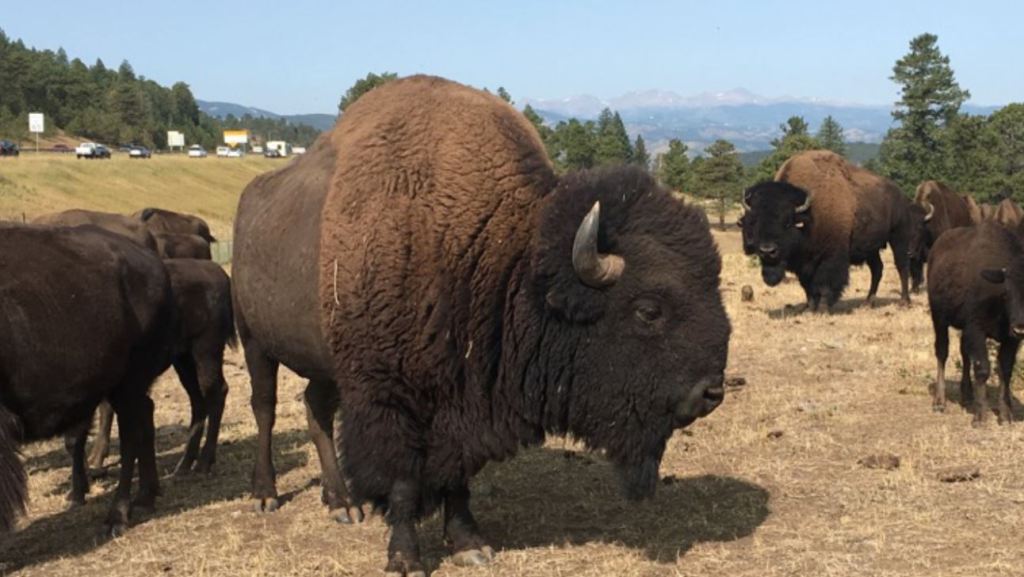
DENVER, Colorado — Back to their roots! 33 American Bison raised from herds at Genessee Park and Daniels Park are making the journey to several plains tribes.
On Monday, the county and city of Denver presented 17 bison to the Cheyenne and Arapaho Tribes in Oklahoma, 15 to the Northern Arapaho Tribe in Wyoming, and one to the Tall Bull Memorial Council in Colorado.
“The bison is not only a vital link to our past as Northern Arapaho, it is essential to our future as we restore this important part of our culture and heritage,” said Elma Brown, interim CEO of the Northern Arapaho Tribe. “I am honored to participate in this bison transfer and look forward to these beautiful animals joining our existing herd and returning to the home of their ancestors on the Wind River Reservation.”
“The Cheyenne and Arapaho Tribes are pleased to continue the growth of our historical food source. The Denver Mountain Parks Bison are a shot in the arm for our tribal nations. We wish Denver Mayor Michael B. Hancock, Denver City Council and Denver Parks and Recreation staff a very gracious Hohóú/Né-á’eše (thank you),” stated Cheyenne and Arapaho Tribes Governor Reggie Wassana.
For the last century, the city and county of Denver have been proud caretakers of these Bison herds, who are descendants of the last wild bison in North America. They were originally established at Denver’s City Park by the Denver Zoo and the City of Denver to conserve the species and prevent extinction.
According to the city, when the first Europeans set foot on current-day North America, bison herds numbered more than 30-million. By the 1880s, those herds were wiped out. At the turn of the 20th century, fewer than 1,000 bison remained in existence. Today it is estimated there are 31,000 free-range wild bison in North America.



Fortunately, this won’t be the last donation we see from Denver– the partnership with, and donations to these tribes, will continue through 2030.
 Casually Kristen
Leave a comment